Oola Bowls: Complete Macros & Nutrition Guide
Complete macro and nutrition guide for Oola Bowls. Learn calories, protein, carbs, fat per serving plus meal ideas and tracking tips.
Table of Contents
- Quick Answer
- Detailed Nutrition Facts
- The "oola bowl" (Flagship Item)
- The "power bowl" (Performance Focus)
- The "zero bowl" (Lower Sugar Option)
- Micronutrient Breakdown
- Serving Size Considerations
- Health Benefits
- Antioxidant Load
- Fiber for Digestive Health
- Who Should Eat This Food
- When to Eat It
- How to Track Macros
- Portion Measurement Tips
- Using Macro Tracking Apps
- Common Serving Sizes
- Meal Ideas & Preparation
- Breakfast Strategy
- Lunch Replacement
- Meal Prep Tips
- For Weight Loss
- Why It Is Challenging
- Portion Recommendations
- Pairing Suggestions
- For Muscle Gain
- Protein Content Benefits
- Pre/Post Workout Timing
- Bulking Meal Ideas
- Comparisons
- Oola Bowls vs. Smoothie King
- Oola Bowls vs. Premium Ice Cream
- Oola Bowls vs. Yogurt Parfaits
- FAQs
- Is the "zero bowl" completely sugar-free?
- What is "Pacoca" listed on the menu?
- Are Oola Bowls gluten-free?
- Can I make the bowls vegan?
- How accurate are the calorie counts?
- What is "Almond Dust"?
Oola Bowls: Complete Macros & Nutrition Guide
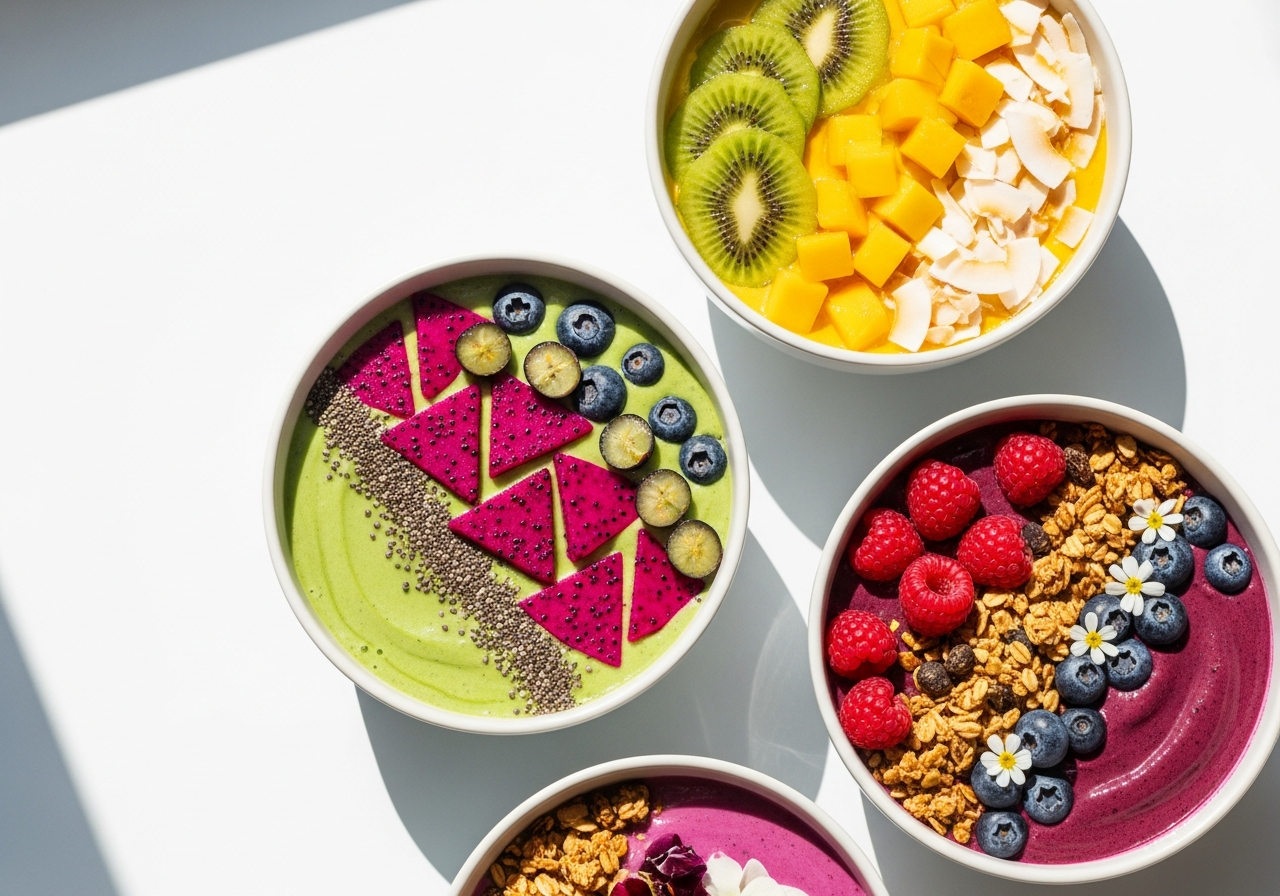
Quick Answer
For a standard serving, the flagship "oola bowl" is an energy-dense meal providing approximately 750 to 900 calories (estimated), with a heavy emphasis on carbohydrates (100g+) and sugar (70g+). While the ingredients—such as Acai berry, hemp seeds, and fruit—are whole and nutrient-rich, the caloric load rivals a substantial fast-food meal. These bowls are best utilized as post-workout fuel or a complete meal replacement rather than a light afternoon snack.
Detailed Nutrition Facts
Analyzing the nutritional profile of Oola Bowls requires dissecting the specific menu items listed on their "Bowls" menu. The nutritional values below are estimates based on standard industry serving sizes for 16oz bowls containing sorbet bases, granola, nut butters, and fruit toppings.
The "oola bowl" (Flagship Item)
This item consists of an Acai base topped with "grandma's granola," peanut butter, banana, strawberries, blueberries, chia seeds, coconut, and honey.
- Calories: 750 - 900 kcal (estimated)
- Total Fat: 30g - 40g (estimated)
- Derived primarily from peanut butter and granola oil content.
- Total Carbohydrates: 110g - 135g (estimated)
- Dietary Fiber: 12g - 15g (estimated)
-
Sugars: 75g - 90g (estimated)
-
Protein: 14g - 18g (estimated)
Key Takeaway: The "oola bowl" contains a high volume of rapidly digesting sugars from the honey and Acai base, balanced slightly by the fats in the peanut butter.
The "power bowl" (Performance Focus)
Designed for active individuals, this bowl includes an Acai base, peanut butter, "grandma's granola," protein powder, banana, strawberries, pineapple, chia seeds, and honey.
- Calories: 800 - 950 kcal (estimated)
- Protein: 25g - 30g (estimated)
-
The addition of protein powder significantly boosts the amino acid profile compared to other bowls.
-
Carbohydrates: 100g+ (estimated)
The "zero bowl" (Lower Sugar Option)
This option uses a "zero sugar acai base" and is topped with strawberries, kiwi, apple, hemp seeds, chia seeds, and agave.
- Calories: 400 - 550 kcal (estimated)
- Sugar Profile: While the base has no added sugar, the agave drizzle adds concentrated fructose.
- Fat Profile: Lower fat than the peanut butter bowls, relying on seeds for lipid content.
Micronutrient Breakdown
The ingredient quality at Oola Bowls provides a robust micronutrient profile that standard fast food lacks.
- Acai and Pitaya: These bases are rich in polyphenols and antioxidants which help combat cellular stress.
- Hemp and Chia Seeds: Found in the "pro bowl" and "island bowl," these seeds provide Alpha-Linolenic Acid (ALA), a plant-based Omega-3 fatty acid essential for heart health.
- Fresh Fruit: The heavy use of strawberries, kiwi, and pineapple ensures a high intake of Vitamin C and Potassium.
Serving Size Considerations
It is important to understand that the caloric density of these bowls is heavily dependent on the "scoop size" of the staff. A heavy hand with the "grandma's granola" or peanut butter drizzle can unknowingly add 200 calories to the estimates provided above.
Health Benefits
Despite the high caloric density, Oola Bowls offer specific functional health benefits when the ingredients are understood and utilized correctly within a balanced diet.
Antioxidant Load
The primary selling point of the Acai and Pitaya bases used in the "island bowl" and "oola bowl" is their antioxidant capacity. Acai berries contain high levels of anthocyanins. These compounds have been linked to reduced inflammation and improved vascular health. Unlike synthetic supplements, the antioxidants here are consumed within a whole-food matrix, improving absorption.
Fiber for Digestive Health
Most Americans fall short of the recommended 25-30g of daily fiber. A single "oola bowl" can provide nearly half of this daily requirement (estimated 12-15g). The combination of soluble fiber from the fruit flesh and insoluble fiber from the granola and seeds supports gut motility and microbiome diversity.
Who Should Eat This Food
- Endurance Athletes: The high carbohydrate availability makes these bowls perfect for replenishing glycogen stores after runs exceeding 90 minutes.
- Individuals with High Metabolic Rates: For those who struggle to maintain weight, the liquid/soft texture allows for high calorie consumption without significant digestive distress.
- Vegetarians: The menu is naturally plant-forward.
When to Eat It
- Post-Training: This is the optimal window. The high sugar content stimulates insulin, which in turn helps shuttle the amino acids from the seeds and nut butters into muscle tissue.
- Early Afternoon: Consuming this heavily caffeinated carbohydrate load (if choosing coffee blends) or sugar load is better earlier in the day to allow for energy expenditure before sleep.
How to Track Macros
Accurate macro tracking for custom food bowls is challenging due to the variability in preparation. Using a systematic approach ensures you stay within your daily targets.
Portion Measurement Tips
If you are eating at the restaurant, visual estimation is your best tool.
- Base: Visualize the size of a baseball. Each "baseball" of sorbet is roughly 150-200 calories (estimated).
- Nut Butter: A standard drizzle is often closer to 2 tablespoons rather than 1.
- Granola: This is the most calorie-dense component. A layer that covers the bowl is likely 0.5 cups.
Using Macro Tracking Apps
Avoid generic database entries. Instead, log the components individually for better accuracy:
- Search for "Acai Puree Sweetened" (approx. 200g or 1.5 cups).
- Search for "Granola with Honey" (approx. 60g or 0.5 cups).
- Search for "Peanut Butter" (approx. 32g or 2 tbsp).
- Add the individual fruits (Banana, Strawberry).
Common Serving Sizes
Oola Bowls offers different sizes.
- Small: Typically 12oz. This is the recommended size for most individuals not performing heavy exercise.
- Regular/Bowl: Typically 16oz. This is the standard size used for the nutrition estimates in this guide.
- Take Home Kits: These allow for precise weighing of ingredients at home, which is the only way to get 100% accurate macro data.
Meal Ideas & Preparation
Oola Bowls can fit into various dietary strategies if you approach the menu with a plan.
Breakfast Strategy
A full "oola bowl" is a heavy start to the day. To prevent a mid-morning glucose crash, consider modifying the order to increase protein.
- Modification: Order the "power bowl" but ask for half the fruit. This maximizes the protein-to-carb ratio.
Lunch Replacement
If having a bowl for lunch, you need satiety. Sugar digests quickly, leaving you hungry.
- The Satiety Order: Choose the "pro bowl." The main ingredients include "pacoca" (peanut crumb) and hemp seeds. These fat-dense ingredients digest slower than the fruit-heavy "island bowl," keeping you fuller for the afternoon.
Meal Prep Tips
If purchasing the "Take Home Kits" (half-gallon tubs):
- Pre-Portioning: Immediately scoop the sorbet into single-serving containers (150g each). This prevents overeating directly from the tub.
- Texture Preservation: Store "grandma's granola" in an airtight jar at room temperature. Never store it in the freezer with the base, or it will become chewy and stale.
- Cooking Methods: Since these are raw/cold preparations, no cooking is involved. This preserves the heat-sensitive Vitamin C in the fruit toppings.
For Weight Loss
Utilizing Oola Bowls during a weight loss phase requires strict portion control and menu modification. The standard menu items are generally too high in calories for a calorie-restricted diet without changes.
Why It Is Challenging
Weight loss requires a caloric deficit. A standard bowl containing 800+ calories (estimated) represents nearly 50% of the daily intake for a petite woman on a cutting diet. The liquid nature of the base also results in lower satiety compared to solid foods.
Portion Recommendations
To make Oola Bowls weight-loss friendly:
- Downsize: Always order the smallest size available.
- Base Swap: Request the "zero sugar acai base" found in the "zero bowl."
- Topping Control: Ask for "light granola" or skip it entirely. Granola is the primary source of caloric density.
- Agave/Honey: Ask for "no drizzle." The fruit provides sufficient sweetness.
Pairing Suggestions
Eat a modified small bowl alongside a source of lean protein, such as a protein shake or egg whites. The protein will lower the overall glycemic index of the meal and increase satiety signals to the brain.
For Muscle Gain
For hypertrophy (muscle growth), Oola Bowls are an excellent tool for achieving a caloric surplus.
Protein Content Benefits
While the standard "oola bowl" is low in protein (estimated 14-18g), the "power bowl" addresses this with added protein powder. The carbohydrates in the bowl are "protein sparing," meaning your body burns the carbs for fuel, allowing the protein you eat to be used strictly for muscle repair.
Pre/Post Workout Timing
- Pre-Workout: Consuming a bowl 2-3 hours before training loads the liver and muscles with glycogen, the primary fuel source for high-intensity lifting.
- Post-Workout: The insulin spike generated by the honey and banana is anabolic in this context. It stops muscle breakdown (catabolism) and initiates the recovery process.
Bulking Meal Ideas
To maximize gains, order the "oola bowl" and add extra "almond dust" or peanut butter. This increases the calorie count to over 1,000 (estimated) without adding significant volume, making it easier to consume the high calories needed for growth.
Comparisons
Understanding how Oola Bowls compares to other market options helps in making informed food choices.
Oola Bowls vs. Smoothie King
- Texture: Oola Bowls are eaten with a spoon ("bowls"), while Smoothie King offers beverages ("blends"). Chewing food generally leads to better satiety than drinking it.
- Ingredients: Oola utilizes whole food toppings like "grandma's granola" and fresh fruit. Smoothie chains often rely more on fruit juice concentrates which lack fiber.
- Verdict: Oola is superior for a meal replacement; smoothies are better for a quick on-the-go snack.
Oola Bowls vs. Premium Ice Cream
- Caloric Density: A large "oola bowl" and a large premium ice cream sundae can both exceed 800 calories.
- Nutritional Quality: Oola Bowls provide fiber, antioxidants, and healthy fats. Ice cream provides saturated fat and refined sugar with little micronutrient value.
- Verdict: Oola is the healthier choice for nutrients, but they are metabolically similar in terms of caloric load.
Oola Bowls vs. Yogurt Parfaits
- Protein: A Greek yogurt parfait typically contains 20g+ of protein per serving. A standard Acai bowl contains less than 5g of protein (excluding toppings).
- Sugar: Yogurt parfaits are generally lower in sugar.
- Verdict: Choose yogurt for weight loss and muscle maintenance. Choose Oola Bowls for high-energy endurance fuel.
FAQs
Is the "zero bowl" completely sugar-free?
No. The "zero bowl" features a "zero sugar acai base," which means no cane sugar is added to the sorbet itself. However, the bowl is topped with fruit (strawberries, apple, kiwi) which contains natural fructose, and agave, which is a concentrated sweetener. It still impacts blood sugar.
What is "Pacoca" listed on the menu?
"Pacoca" is a traditional Brazilian confection made from ground peanuts, sugar, and salt. It has a texture similar to crumbly peanut butter. It is calorie-dense and adds significant fat and sugar to the bowl.
Are Oola Bowls gluten-free?
The base ingredients (Acai, Pitaya, Fruit) are naturally gluten-free. However, "grandma's granola" is oat-based. Unless the menu specifies "Certified Gluten-Free Oats," there is a risk of cross-contamination. Individuals with Celiac disease should exercise caution or request the bowl without granola.
Can I make the bowls vegan?
Yes. The fruit bases are vegan. The primary non-vegan ingredient is honey, which is drizzled on many bowls like the "oola bowl" and "power bowl." Simply request "no honey" or swap it for agave to make the meal 100% plant-based.
How accurate are the calorie counts?
Calorie counts in made-to-order food service are estimates. Variations in scooping technique, fruit size, and drizzle amounts can cause the actual caloric content to vary by +/- 20% from the estimated values.
What is "Almond Dust"?
"Almond dust" appears on the menu as a topping or side. It is finely ground almonds. It provides a texture contrast similar to "pacoca" but with a different flavor profile and is a source of Vitamin E and healthy fats.
Track Oola Bowls easily with JustMacrosFit - your free macro tracking app.