Homemade vs Fast Food Protein: Which Has Better Macros?
Compare homemade vs fast food protein macros, calories, protein, and nutrition. Find out which is better for weight loss and muscle gain.
Table of Contents
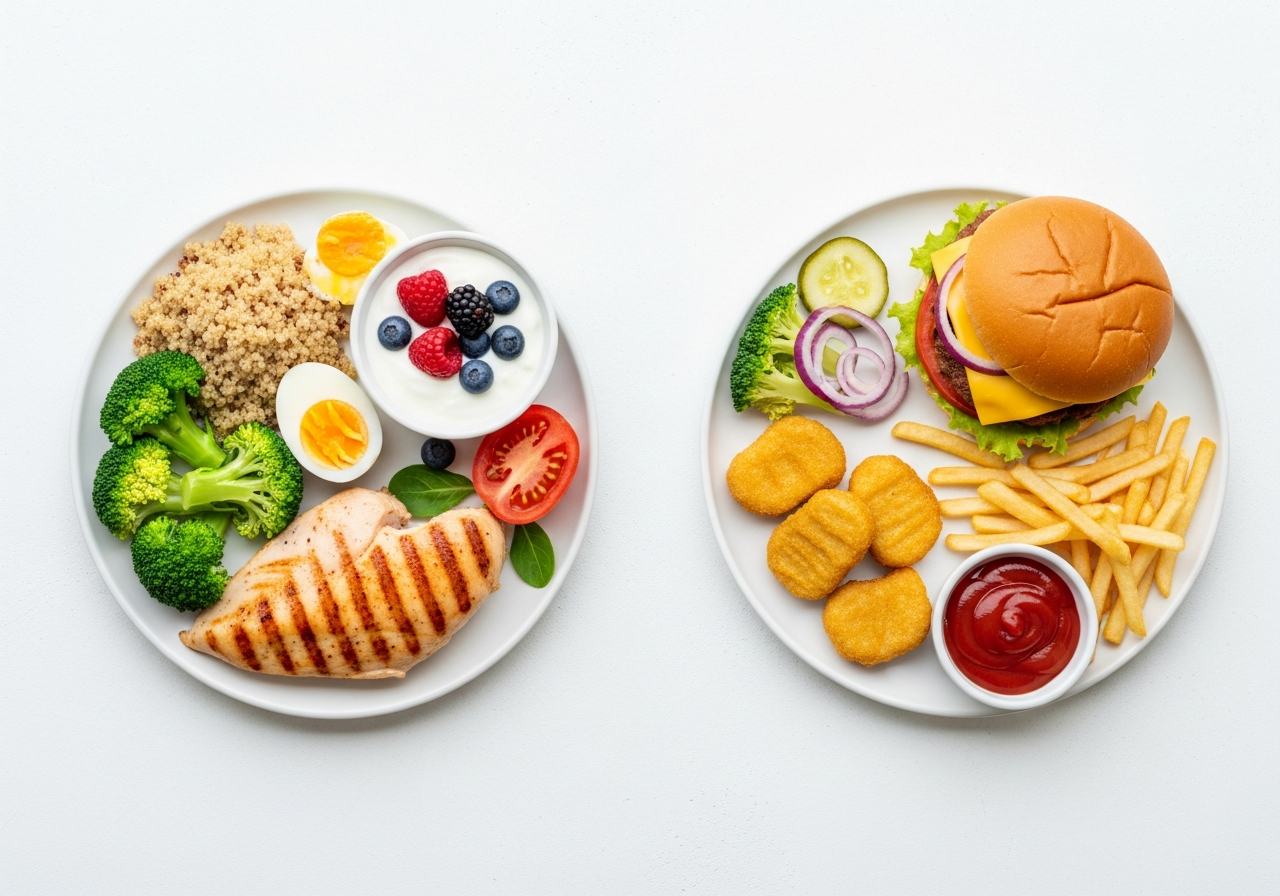
Homemade vs Fast Food Protein: Which Has Better Macros?
In today's fast-paced world, choosing between a home-cooked meal and a convenient fast-food option is a daily dilemma for many. For those focused on their health and fitness goals, the question often boils down to one critical factor: macros. Understanding the nutritional breakdown, or macronutrients, of your food, including protein, carbohydrates, and fats, is essential for weight management, muscle gain, and overall well-being. This comprehensive nutrition comparison dives deep into the macros of homemade versus fast food protein sources to help you make informed dietary choices.
Quick Verdict
When it comes to macro composition, homemade protein generally offers superior control and a healthier profile. For weight loss, homemade meals are typically better due to lower calorie density and fat content, making it easier to manage overall intake and feel satiated. For muscle gain, both can provide ample protein, but homemade sources often offer higher quality protein with a more favorable amino acid profile and fewer undesirable additives. Best overall value often goes to homemade meals, which are typically more cost-effective per serving and provide a greater nutrient density for your dollar. Fast food can offer convenience in a pinch, but its macro balance often comes with trade-offs in terms of fat, sodium, and processed ingredients.
Homemade Macro Breakdown
Homemade protein sources, especially lean ones, are celebrated for their clean macro profiles and high nutritional value. When you prepare meals at home, you have complete control over the ingredients, cooking methods, and portion sizes, allowing for precise macro management.
Typical lean homemade protein sources include:
* Chicken Breast (skinless, boneless): Per 100g, cooked chicken breast provides approximately 165 calories, 31g protein, 0g carbohydrates, and 3.6g fat. This makes it an incredibly protein-dense and lean option.
* Fish (e.g., Cod, Tilapia, Tuna): White fish varieties like cod or tilapia offer around 80-100 calories, 17-20g protein, 0g carbs, and 1-2g fat per 100g. Tuna, particularly canned in water, is also an excellent lean protein source.
* Eggs (especially egg whites): Egg whites are nearly pure protein, with about 52 calories, 11g protein, 1g carbs, and 0.2g fat per 100g. Whole eggs provide more fat and calories but are rich in micronutrients.
* Lean Beef (e.g., 90/10 ground beef, sirloin): While higher in fat than chicken breast or white fish, lean beef still offers a significant protein punch. Per 100g, cooked lean ground beef might have around 250 calories, 26g protein, 0g carbs, and 15g fat, depending on the leanness and cooking method.
Key nutritional highlights of homemade protein meals include:
* High Protein Density: Animal sources often provide 70% or more of their calories from protein.
* Lower Saturated and Trans Fats: You can choose leaner cuts of meat and healthier cooking oils.
* Reduced Sodium: Home cooking allows you to minimize added salt, which is often excessive in processed foods.
* Higher Fiber Content: Incorporating plenty of vegetables and whole grains with your protein enhances fiber intake.
* Essential Micronutrients: Fresh, unprocessed ingredients are richer in vitamins and minerals.
Best uses for homemade protein include daily meals, meal prepping for the week, and tailoring food intake precisely to fitness goals, whether it's for weight loss, muscle gain, or maintaining a healthy lifestyle. Preparing protein smoothies at home also gives complete control over flavor and nutrient content, often providing 400-600 calories with substantial protein, along with vitamins and minerals.
Fast Food Protein Macro Breakdown
Fast food protein options offer unparalleled convenience, but their macro profiles often tell a different story compared to their homemade counterparts. While many fast-food chains now offer "healthier" choices, the typical fast food meal, particularly those with fried items, often contains higher levels of calories, unhealthy fats, sodium, and processed ingredients.
Common fast food protein examples and their typical macro ranges:
* Grilled Chicken Sandwich: A popular "healthier" option. For instance, a grilled chicken filet sandwich might provide around 316-419 calories per serving, with 27-45g carbohydrates, 8.7-23g fat, and 28-38g protein. Some, like Chick-fil-A's Grilled Chicken Sandwich, can be lower in fat and sodium compared to fried alternatives.
* Standard Beef Burger (single patty with bun and condiments): A typical fast-food hamburger (single patty) can range from 300 to over 500 calories, with protein content around 15-32g. Fat content can be significant, ranging from 13g to over 20g, and carbohydrates from the bun and sauces often push totals to 30g or more. A McDonald's Big Mac, for example, contains 580 calories, 34g fat, 45g carbs, and 25g protein.
* Fried Chicken Nuggets/Sandwiches: These tend to be significantly higher in calories, fat (especially saturated and trans fats), and sodium due to breading and deep-frying.
Key nutritional highlights of fast food protein meals often include:
* Higher Calorie Density: Fast food is often calorie-dense but may lack essential nutrients found in whole foods.
* Elevated Fat Content: Particularly saturated and trans fats, which can negatively impact heart health. Wendy's grilled chicken options, for example, can be higher in calories from fat due to using rib meat.
* High Sodium Levels: Restaurant meals are frequently high in sodium to enhance flavor, which can contribute to high blood pressure.
* Processed Carbohydrates: Buns and added sugars in sauces contribute to higher carbohydrate counts, often from refined grains.
* Lower Fiber: Fast food meals typically lack dietary fiber, important for digestion and overall health.
Best uses for fast food protein are primarily for convenience when time or access to a kitchen is limited. It can fit into a healthy diet in moderation, especially if healthier, grilled options are chosen and portion sizes are managed.
Macro Comparison Table
Here's a side-by-side comparison of typical macros per 100g and per common serving for representative homemade and fast food protein sources. Values are approximate and can vary based on specific recipes, ingredients, and restaurant preparation.
| Category | Item | Serving Size (approx.) | Calories (per serving) | Protein (per serving) | Carbs (per serving) | Fat (per serving) | Calories (per 100g) | Protein (per 100g) | Carbs (per 100g) | Fat (per 100g) |
|---|---|---|---|---|---|---|---|---|---|---|
| Homemade | Chicken Breast (cooked) | 100g | 165 | 31g | 0g | 3.6g | 165 | 31g | 0g | 3.6g |
| Baked Salmon | 100g | 208 | 20g | 0g | 13g | 208 | 20g | 0g | 13g | |
| Fast Food | Grilled Chicken Sandwich | 140g | 316 | 30g | 27g | 8.7g | 226 | 21.4g | 19.3g | 6.2g |
| Beef Burger (single patty) | 145g | 418 | 25.4g | 30g | 20.9g | 288 | 17.5g | 20.7g | 14.4g |
Note: The grilled chicken sandwich values are based on an average from search results. The beef burger values are based on USDA data for a single-patty hamburger. Actual values can vary.
For Weight Loss
For individuals aiming for weight loss, homemade protein options generally offer a significant advantage. The primary reason lies in the ability to control calorie density and ingredient quality.
Homemade meals allow for:
* Calorie Efficiency: You can easily prepare meals with high protein content and low calories by choosing lean protein sources, cooking with minimal added fats, and incorporating plenty of non-starchy vegetables. Research indicates that those who frequently cook at home consume fewer calories, fat, and sugar daily. This makes it easier to create a calorie deficit necessary for weight loss.
* Increased Satiety: Lean protein and fiber-rich vegetables in homemade meals contribute to greater satiety, helping you feel fuller for longer. This reduces the likelihood of overeating or snacking on unhealthy foods. The volume of food consumed can also be higher for fewer calories with homemade meals, a concept known as "volume eating".
* Reduced Unhealthy Components: By preparing food yourself, you can avoid the excessive sodium, saturated fats, and added sugars often found in fast food, all of which can hinder weight loss efforts and overall health. Excessive sodium can lead to water retention, impacting weight and blood pressure.
Fast food, on the other hand, frequently presents meals that are calorie-dense and less satiating, often due to higher fat and refined carbohydrate content, and lower fiber. An average fast food order can range from 1,100 to 1,200 calories, which can represent a substantial portion of a person's daily recommended intake. While individual items like a grilled chicken sandwich can be a better choice, the overall meal often includes sides and drinks that quickly escalate calorie, fat, and sugar counts.
For Muscle Gain
When the goal is muscle gain, adequate protein intake is paramount. Both homemade and fast food options can provide sufficient protein, but the quality and accompanying macros differ considerably.
- Protein Comparison: Homemade meals excel in providing high-quality, complete proteins with a full spectrum of essential amino acids crucial for muscle protein synthesis. Sources like chicken breast, eggs, lean beef, and fish are excellent for this purpose. When preparing meals at home, you can easily scale up protein portions to meet higher demands for muscle growth without excess unhealthy fats.
- Amino Acid Profile: Animal proteins, commonly used in homemade meals, are complete proteins, meaning they contain all nine essential amino acids the body cannot produce on its own. This makes them highly effective for muscle repair and growth. While fast food often contains animal proteins, the overall nutritional context might be less ideal.
- Pre/Post-Workout Uses: Homemade protein sources are highly versatile for pre and post-workout nutrition. A lean protein and carbohydrate meal can be precisely timed for energy before a workout and for recovery and muscle repair afterward. For example, a protein smoothie with whey protein, fruit, and nuts can provide 400-600 calories and ample protein for muscle building. Fast food, while convenient post-workout, often comes with higher fat levels which can slow digestion, potentially delaying nutrient delivery to muscles. Some fast food items, especially those high in fat and processed ingredients, are generally not recommended for muscle gain as they can lead to increased fat storage rather than lean muscle.
While it's possible to find high-protein fast food meals, like some grilled chicken options or specific protein bowls, they often come with compromises in other macro areas such as higher sodium or less favorable fat profiles.
Taste, Cost & Availability
The choice between homemade and fast food protein also involves practical considerations like taste, cost, and availability.
- Taste Comparison: Homemade food offers unparalleled customization, allowing you to tailor flavors, spices, and ingredients to your personal preferences. This often results in more satisfying and varied meals. Fast food offers a consistent taste experience, which can be appealing, but it often relies on high levels of salt, sugar, and fat to achieve its characteristic flavor profile, which can be less nuanced than home cooking.
- Price Point: In the long run, homemade meals are almost always more cost-effective. Purchasing ingredients in bulk and cooking multiple servings can significantly reduce the cost per meal. Studies consistently show that cooking at home can save hundreds of dollars annually compared to regularly eating out. While a single fast-food meal might seem inexpensive, the costs add up quickly, especially when considering the lack of leftovers or the need for additional snacks.
- Availability: Fast food wins on immediate availability and convenience, especially for those with busy schedules or limited cooking skills. Drive-thrus and delivery apps make fast food accessible nearly anywhere, anytime. Homemade food requires planning, grocery shopping, and cooking time. However, strategies like meal prepping can significantly increase the convenience of homemade options, making healthy meals readily available throughout the week.
Final Verdict
Ultimately, homemade protein consistently emerges as the overall winner in a comprehensive nutrition comparison. It offers superior control over macros, higher nutrient density, and greater potential for long-term health benefits, whether your goal is weight loss, muscle gain, or general well-being. The ability to customize ingredients, limit unhealthy fats and sodium, and maximize fiber intake makes home cooking the optimal choice for a balanced diet.
However, this does not mean fast food should be entirely banished. Fast food serves a practical purpose for occasional convenience, especially when traveling or when time constraints are severe. When choosing fast food, opt for grilled lean protein sources, skip sugary drinks and fried sides, and be mindful of portion sizes to mitigate the less favorable macro profiles.
Can you eat both? Absolutely. The key is balance and moderation. Prioritizing homemade meals for the majority of your protein intake and strategically incorporating healthier fast-food options when necessary can help you achieve your macro goals and maintain a healthy lifestyle.
FAQs
Q1: Is fast food protein inherently "bad" for you?
A1: Not inherently, but fast food protein often comes with higher levels of unhealthy fats, sodium, and processed ingredients compared to homemade options. Healthier fast food choices, such as grilled chicken salads or sandwiches, can fit into a balanced diet in moderation.
Q2: Can I build muscle effectively by eating fast food protein?
A2: While fast food can provide protein, relying heavily on it for muscle gain may lead to excessive intake of unhealthy fats and calories that can promote fat gain rather than lean muscle. Homemade meals allow for better control over nutrient timing and quality, which is crucial for optimal muscle growth.
Q3: Which is more budget-friendly, homemade or fast food protein?
A3: Homemade protein is generally more budget-friendly in the long run. The cost of ingredients for multiple home-cooked meals is often less than regularly purchasing comparable fast-food options.
Q4: How does the protein quality compare between homemade and fast food?
A4: Homemade meals typically offer higher quality protein from less processed sources, ensuring a complete amino acid profile vital for bodily functions and muscle repair. Fast food protein, while often from animal sources, might be accompanied by more processed components and additives.
Q5: Is it possible to eat healthy fast food protein options for weight loss?
A5: Yes, it is possible. Look for grilled chicken options, salads with lean protein and light dressing, or un-breaded protein sources. Avoid fried items, sugary drinks, and high-calorie sauces to keep the meal calorie-efficient for weight loss.
Q6: What are the main downsides of fast food protein for overall health?
A6: The main downsides include higher levels of sodium, saturated and trans fats, processed carbohydrates, and lower fiber content, which can contribute to health issues like high blood pressure, elevated cholesterol, and weight gain.
Q7: How can I make homemade protein meals more convenient?
A7: Meal prepping, cooking in larger batches, and utilizing quick cooking methods like air frying or instant pots can make homemade protein meals highly convenient throughout the week.
Track both homemade and fast food protein easily with JustMacros.