Cooked Rice vs Uncooked Rice: Which Has Better Macros?
Compare cooked rice vs uncooked rice macros, calories, protein, and nutrition. Find out which is better for weight loss and muscle gain.
Table of Contents
Cooked Rice vs Uncooked Rice: Which Has Better Macros?
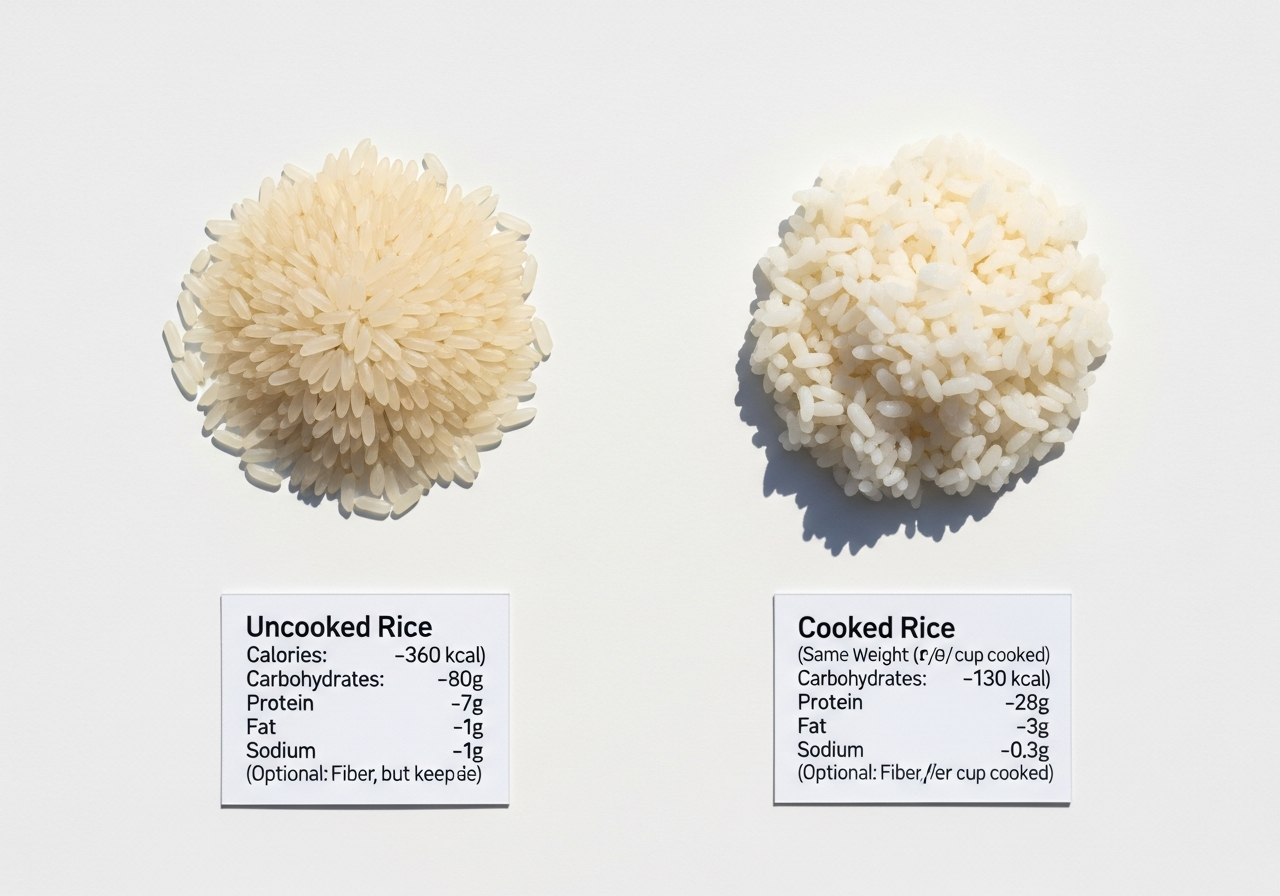
Navigating the world of grains can be confusing, especially when it comes to understanding their nutritional impact. Rice, a global staple, is commonly consumed in its cooked form. However, the raw, uncooked grain also holds nutritional value. This article dives deep into a comprehensive nutrition comparison of cooked rice vs uncooked rice, focusing on their macronutrient profiles to help you make informed dietary choices for your fitness goals. We will analyze their differences, examine their suitability for weight loss and muscle gain, and consider practical aspects like taste and cost.
Quick Verdict
When considering macros, the primary difference between cooked and uncooked rice lies in their water content. Uncooked rice is dense in nutrients and calories per dry weight, while cooked rice is diluted by water, making it less calorie-dense per serving.
Best for weight loss: Cooked rice is generally better for weight loss. Its increased volume due to water absorption makes it more filling, aiding in satiety with fewer calories per serving. This allows for larger portions, which can be psychologically satisfying during a calorie-restricted diet.
Best for muscle gain: Both can contribute to muscle gain, but uncooked rice offers a more concentrated source of energy and carbohydrates for fueling intense workouts. However, the ease of digestion and quicker absorption of cooked rice can make it an excellent post-workout recovery option.
Best overall value: From a pure nutritional density standpoint, uncooked rice offers more concentrated macronutrients per gram. However, in terms of practicality, affordability, and versatility in everyday meals, cooked rice provides better value due to its immediate edibility and widespread availability in prepared forms.
Cooked Rice Macro Breakdown
Cooked rice, typically after boiling or steaming, undergoes a significant transformation. Water absorption increases its volume and weight substantially. A standard serving of 100 grams of cooked white rice contains approximately:
- Calories: 130-150 kcal
- Protein: 2.5-3 grams
- Carbohydrates: 28-30 grams (mostly complex carbohydrates)
- Fat: Less than 0.5 grams
The key nutritional highlight of cooked rice is its role as an easily digestible carbohydrate source. The cooking process breaks down some of the starches, making them more readily available for energy. While relatively low in protein and fat, cooked rice serves as an excellent base for meals, providing sustained energy without a significant fat load. It is best used as a primary energy source for daily activities, a comforting component of balanced meals, and as a recovery fuel post-exercise. The increased volume contributes to feelings of fullness, which is beneficial for managing hunger.
Uncooked Rice Macro Breakdown
Uncooked rice, also known as dry or raw rice, represents the grain in its concentrated, dehydrated state. One hundred grams of uncooked white rice typically contains approximately:
- Calories: 360-370 kcal
- Protein: 7-8 grams
- Carbohydrates: 78-80 grams (complex carbohydrates)
- Fat: 0.5-1 gram
The significant nutritional highlight of uncooked rice is its high concentration of macronutrients per unit of weight. This density makes it a potent energy source. The complex carbohydrates provide a slow release of glucose into the bloodstream, offering sustained energy. While the protein content is higher than in cooked rice on a dry weight basis, it is still not a primary protein source compared to legumes or meats. Uncooked rice is best used when precise portion control is needed for calculating macros, as a bulk ingredient for meal preparation, or as a reserve of energy-dense carbohydrates. Its dry nature also means it requires cooking before consumption.
Macro Comparison Table
Here's a side-by-side comparison of the macronutrient profiles for both cooked and uncooked rice, focusing on 100-gram servings. It's important to note that cooking adds water, significantly altering the density and therefore the per-gram macronutrient values.
| Nutrient | Cooked Rice (per 100g) | Uncooked Rice (per 100g) |
|---|---|---|
| Calories (kcal) | 130-150 | 360-370 |
| Protein (g) | 2.5-3 | 7-8 |
| Carbohydrates (g) | 28-30 | 78-80 |
| Fat (g) | <0.5 | 0.5-1 |
To further illustrate the difference, let's consider a common serving size, such as approximately 1 cup of cooked rice (around 150g) compared to the equivalent dry amount of uncooked rice that would yield that cooked portion (roughly 50g uncooked).
| Nutrient | Cooked Rice (per 1 cup, ~150g) | Uncooked Rice (per ~1/2 cup, ~50g) |
|---|---|---|
| Calories (kcal) | 195-225 | 180-185 |
| Protein (g) | 3.75-4.5 | 3.5-4 |
| Carbohydrates (g) | 42-45 | 39-40 |
| Fat (g) | <0.75 | 0.25-0.5 |
This table highlights how the water content in cooked rice makes it appear more voluminous and less calorie-dense per weight.
For Weight Loss
For individuals focused on weight loss, cooked rice vs uncooked rice presents a clear advantage for the former. The primary reason is satiety and calorie efficiency. When rice is cooked, it absorbs a significant amount of water, increasing its volume by two to three times. This means a portion of cooked rice will occupy more space in your stomach than the equivalent weight of uncooked rice. This physical fullness can help manage hunger and reduce overall calorie intake.
Furthermore, cooked rice is less calorie-dense. As seen in the macro comparison, 100 grams of cooked rice contains around 130-150 calories, while 100 grams of uncooked rice contains over 360 calories. This allows individuals to consume a larger, more satisfying portion of cooked rice for fewer calories, making it easier to adhere to a calorie deficit without feeling deprived. While uncooked rice offers more concentrated macros, its high calorie density can make portion control challenging for weight loss goals. When tracking macros for weight loss, choosing cooked rice and being mindful of portion sizes is a more effective strategy.
For Muscle Gain
When the goal is muscle gain, both cooked and uncooked rice can play a role, but their applications differ. Uncooked rice, with its higher concentration of carbohydrates and calories per gram, serves as an excellent pre-workout fuel. The complex carbohydrates provide a steady release of energy, powering through demanding training sessions and preventing premature fatigue. For those needing to increase their overall calorie intake to support muscle hypertrophy, the calorie density of uncooked rice is beneficial. A smaller portion of uncooked rice provides a significant energy boost.
Cooked rice, on the other hand, is ideal for post-workout recovery. Its starches are more easily digestible after cooking, allowing for a quicker replenishment of glycogen stores in muscles. This rapid refueling is crucial for muscle repair and growth. While uncooked rice has a slightly higher protein content per dry weight, neither form of rice is a primary protein source for muscle building; it should be complemented by adequate protein intake from other food sources. Therefore, for muscle gain, consider uncooked rice for pre-workout energy and cooked rice for post-workout recovery, always ensuring sufficient overall protein and calorie intake.
Taste, Cost & Availability
Beyond the macros, practical considerations like taste, cost, and availability are crucial for integrating rice into your diet.
Taste: Uncooked rice has a neutral, slightly grainy taste. It is not palatable or digestible in its raw state and must be cooked to be consumed. Cooked rice, depending on the type and cooking method, can range from fluffy and light to slightly sticky and moist. Its flavor is generally mild, making it a versatile base for a wide array of culinary preparations. The taste of cooked rice is often enhanced by seasonings, sauces, and accompanying dishes.
Price Point: Both cooked and uncooked rice are generally very affordable, making them accessible staple foods globally. Uncooked rice is typically sold in larger bags, offering a lower cost per serving. The price of cooked rice can vary depending on whether it is prepared at home or purchased ready-to-eat, with the latter being significantly more expensive. For budget-conscious individuals, buying uncooked rice and cooking it at home offers the best economic value.
Versatility in Meals: Uncooked rice itself has no culinary use beyond being a raw ingredient. Cooked rice, however, is incredibly versatile. It can be a side dish to curries, stir-fries, and grilled meats. It forms the base of pilafs, fried rice, sushi, and rice puddings. Its mild flavor allows it to absorb and complement the tastes of other ingredients, making it a cornerstone in cuisines worldwide. This adaptability ensures that cooked rice can be incorporated into countless meals, meeting diverse dietary needs and preferences.
Final Verdict
The comparison between cooked rice vs uncooked rice reveals that neither is definitively "better" overall; their suitability depends entirely on your specific dietary objectives and how you intend to use them.
For weight loss, cooked rice is generally the preferred choice. Its water absorption increases volume and satiety while offering fewer calories per serving, aiding in calorie control without significant hunger.
For muscle gain, uncooked rice offers a more concentrated energy source for fueling intense workouts and increasing overall calorie intake. Cooked rice is excellent for post-workout glycogen replenishment.
Can you eat both? Absolutely. Most people consume rice in its cooked form daily. Uncooked rice is a pantry staple that becomes cooked rice. The key is understanding their nutritional differences to leverage them effectively. When tracking macros, using an app that accounts for the water content of cooked rice is essential for accuracy.
Track both cooked rice and uncooked rice easily with JustMacros.